


How to Choose a Reliable Mobile Accessories Supplier in India
A buyer's checklist for evaluating product quality, range, pricing, availability and supplier reliability.
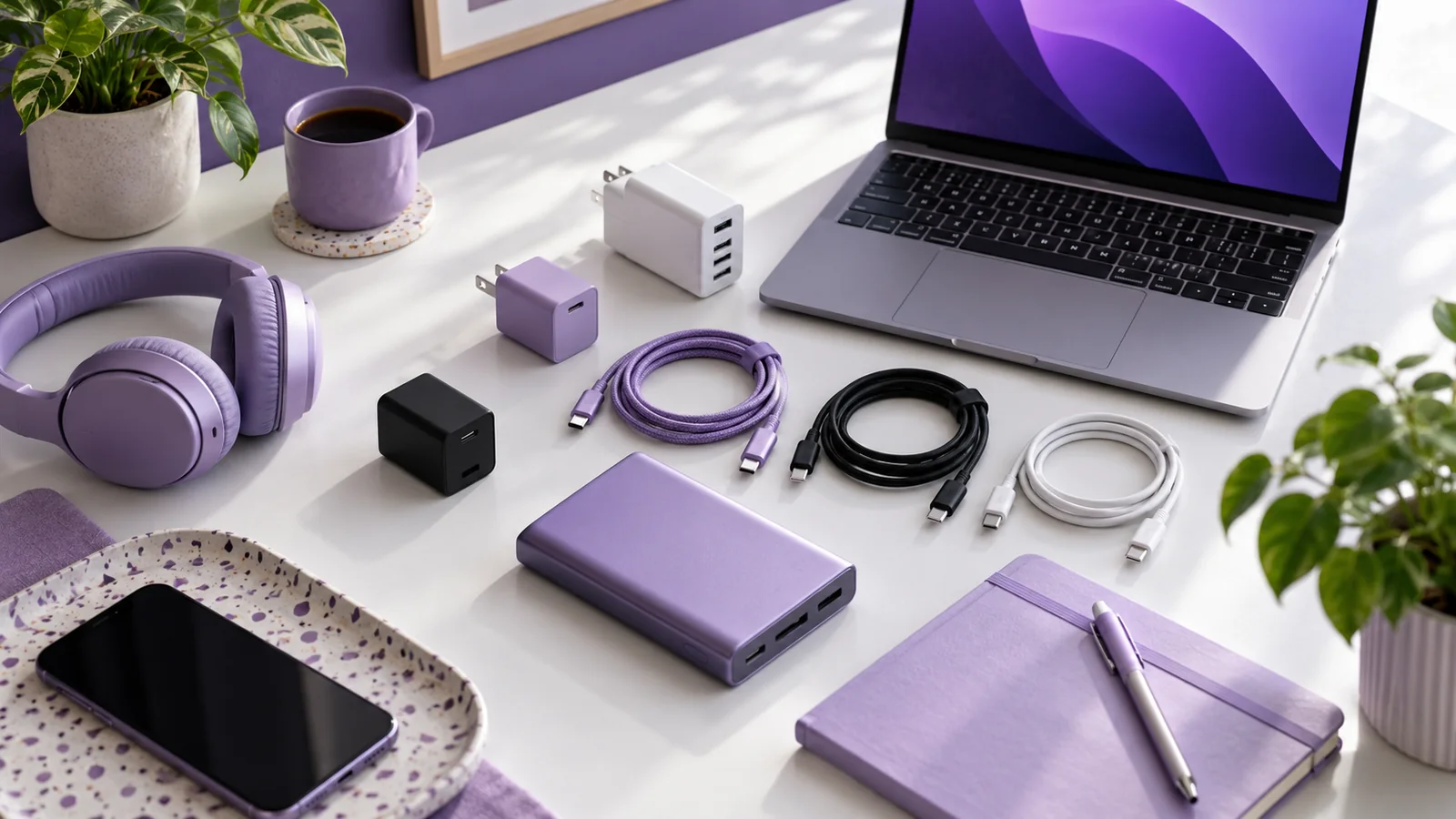
For a retailer, wholesaler, distributor or business buyer, choosing a mobile accessories supplier is more than comparing prices.
The supplier you work with can influence the quality of your product range, pricing, inventory decisions and customer experience.
Mobile accessories are also a broad category. Chargers, cables, power banks and batteries come in different specifications, price points and quality levels. B2B marketplaces in India commonly emphasize factors such as product selection, competitive pricing, supplier reliability, business documentation and delivery when serving retailers and other business buyers.
So, how do you evaluate a mobile accessories supplier before building a business relationship?
Here are the key factors to consider.
1. Start With Product Quality
Price is important, but product quality should come first.
A low-cost accessory may appear attractive initially, but inconsistent quality can lead to:
Customer complaints
Product returns
Damaged brand reputation
Reduced repeat purchases
Higher replacement costs
This is particularly important with products such as chargers, cables and power banks because they are directly involved in charging and power delivery.
When evaluating a supplier, ask:
What quality standards does the supplier follow?
Are product specifications clearly documented?
Is the same product quality maintained across batches?
Are products tested before supply?
Is warranty information available where applicable?
A supplier should be able to give you enough product information to make an informed purchasing decision.
2. Look at the Complete Product Range
A supplier with only a few products may not be enough for a growing accessories business.
Instead, look at the breadth and relevance of the product portfolio.
For mobile accessories, this could include:
Chargers
Different charging powers, connector types and charging technologies.
Cables
USB-A, USB-C, Micro-USB and other connector combinations.
Power Banks
Different capacities, output levels and charging capabilities.
Batteries
Products covering different mobile-device requirements.
Having multiple relevant categories can make sourcing more convenient and help businesses build a more complete accessories portfolio.
B2B platforms such as Amazon Business and Udaan similarly highlight broad product selection and category variety as part of business sourcing.
3. Don't Compare Suppliers on Price Alone
Price is obviously an important part of wholesale purchasing.
But the lowest price isn't necessarily the lowest overall cost.
Consider:
Product price + quality + consistency + availability + logistics + after-sales considerations
A slightly higher-priced product may make more sense if it offers better consistency and fewer quality-related problems.
When comparing suppliers, ask for a clear understanding of:
Product price
Applicable taxes
Minimum order requirements
Shipping or logistics costs
Available discounts
Payment terms
Warranty or replacement terms
B2B purchasing platforms commonly provide business buyers with tools to compare pricing, obtain quotes and evaluate suppliers.
4. Check Product Specifications Carefully
Mobile accessories aren't one-size-fits-all products.
A charger labelled 65W and a charger labelled 20W serve different requirements.
Similarly, cables can differ in:
Connector type
Power capability
Data-transfer capability
Length
Construction
Power banks can differ in:
Capacity
Output wattage
Input wattage
Ports
Charging protocols
A reliable supplier should provide clear product specifications rather than expecting buyers to make decisions based purely on product images.
This becomes particularly important when you're building a product catalogue for your own customers.
5. Look for a Supplier With the Right Product Mix
A good product range isn't necessarily the largest product range.
It should be relevant to your market.
For example, a mobile accessories retailer might need:
Everyday chargers
Fast chargers
USB-C cables
Other device-specific cables
Power banks
Batteries
A distributor serving multiple markets may need a much broader selection.
So before choosing a supplier, understand your own customers.
Ask yourself:
What products sell in my market?
What price points do my customers prefer?
Which products need regular replenishment?
Which categories do I want to expand into?
The right supplier should be able to support the type of portfolio you want to build.
6. Check Product Availability
A product can be competitively priced and high quality, but if it isn't available when you need to replenish your stock, it can become a problem.
Consistent availability matters particularly for fast-moving products.
Before partnering with a supplier, ask about:
Current stock availability
Regular replenishment
Lead times
Product continuity
Availability across locations
How out-of-stock situations are handled
For a retailer or distributor, inventory continuity can be just as important as the initial purchase price.
7. Understand Minimum Order Requirements
Different suppliers may have different approaches to order quantities.
Some may require large quantities, while others may allow smaller orders.
Your ideal requirement depends on your business stage.
New business
You may want to test products before committing to larger quantities.
Established retailer
You may already know which products move consistently.
Wholesaler or distributor
You may require larger quantities and a broader product range.
Ask the supplier:
What is the minimum order quantity for this product?
And if you're considering multiple products:
Can different products be combined within an order?
Understanding this before placing an order can help you manage inventory more effectively.
8. Evaluate the Supplier's Business Reliability
A supplier isn't simply a source of products.
They become part of your supply chain.
So look beyond the product catalogue.
Consider:
How quickly they respond
Whether product information is clear
How quotations are handled
Whether commitments are communicated clearly
How stock information is shared
How issues are resolved
Whether documentation is provided
Platforms serving B2B buyers increasingly emphasize transparency around sellers, pricing, product information and commercial documentation.
A supplier that communicates clearly can make ongoing purchasing considerably easier.
9. Ask About Warranty and Replacement Policies
Not every accessory has the same warranty or replacement terms.
Before purchasing, understand what applies to the specific products you're considering.
Ask:
Is there a warranty?
What does the warranty cover?
How long does it apply?
What happens if a product is defective?
How are replacement claims handled?
Who is responsible for shipping during a claim?
Don't assume that every product from a supplier automatically has the same warranty conditions.
Get the terms clearly before placing substantial orders.
10. Consider Business Documentation
If you're purchasing for a business, proper documentation can matter.
Depending on your business and transaction, you may need:
GST invoice
Product invoice
Company details
Product specifications
Warranty information
Shipping documentation
B2B procurement platforms in India commonly provide GST-enabled purchasing and commercial invoicing for eligible transactions.
When evaluating a direct supplier, ask what documentation they provide for business purchases.
11. Look at Distribution and Delivery Capability
If you are building a business around mobile accessories, geography matters.
A supplier should ideally be able to support your required market efficiently.
Ask:
Where are products available?
How are orders dispatched?
What locations can they supply?
What are the typical delivery timelines?
Can they support your expected order volume?
For businesses operating across multiple locations, a supplier with broader availability can simplify procurement.
12. Don't Ignore Communication
This sounds simple, but it's important.
Imagine having a product issue and being unable to reach your supplier.
Or needing updated pricing but waiting several days for a response.
Or having an urgent requirement without clear stock information.
Good supplier communication can make a significant difference.
Before entering into a long-term relationship, observe how the supplier handles your initial enquiry.
Are they:
Responsive?
Clear?
Professional?
Transparent?
Willing to answer questions?
Able to provide relevant product information?
Your initial interaction can tell you a lot about what future communication might look like.
13. Test Products Before Scaling
If you're working with a new supplier, consider evaluating products before committing to a large order where practical.
You can assess:
Product quality
Packaging
Performance
Build quality
Customer response
Compatibility
Product presentation
This can be particularly useful when you're unfamiliar with a product category.
The goal isn't simply to find the cheapest product.
It's to determine whether the product is appropriate for your customers and business model.
14. Consider the Supplier's Ability to Scale With You
Your requirements today may not be the same six months from now.
A small retailer may eventually become a larger retailer.
A retailer may become a wholesaler.
A wholesaler may expand into distribution.
When evaluating a supplier, consider whether they can potentially support increasing requirements.
Ask:
Can this supplier support my business if my order volume grows?
That question can be more valuable than simply asking:
Who has the lowest price today?
15. Questions to Ask a Mobile Accessories Supplier
Before partnering with a supplier, you can use this checklist.
Product
What product categories do you offer?
What are your best-selling products?
What specifications are available?
Are products quality-tested?
What warranty applies?
Pricing
What is the wholesale price?
Are quantity-based prices available?
What is the minimum order quantity?
Are taxes included?
Are shipping charges separate?
Availability
Which products are currently available?
How often is stock replenished?
Can you supply my location?
What are the expected dispatch timelines?
Business
Do you provide GST invoices?
What payment methods are available?
How are defective products handled?
Who should I contact for future orders?
Partnership
Do you work with retailers?
Do you work with wholesalers?
Do you work with distributors?
Are there opportunities for ongoing supply?
A Simple Supplier Evaluation Framework
You can compare potential suppliers using five core areas:
Instead of choosing a supplier based on one factor, look at the overall fit with your business requirements.
Why Product Range Matters
For a business buying mobile accessories, sourcing multiple complementary categories from a suitable supplier can simplify purchasing.
For example, a buyer may need:
Chargers + Cables + Power Banks + Batteries
rather than sourcing each category separately.
This is one reason broad B2B product catalogues can be useful for retailers and other business buyers. Amazon Business, for example, groups chargers, cables and power accessories within its wholesale mobile-accessories offering.
The goal is not necessarily to buy everything from one supplier.
The goal is to find suppliers whose product range matches your requirements.
DZIVE: Mobile Accessories for Business Requirements
Quality. Reliability. Competitive Value.
DZIVE is an established mobile accessories brand offering a broad range of products across key categories including:
Wall and car chargers
Charging and HDMI cables
Power banks and neckbands
USB hubs and Wi-Fi dongles
The DZIVE catalogue includes multiple models and specifications across its power, audio and connectivity range.
For distributors, wholesalers and corporate buyers, DZIVE focuses on quality-focused products, competitive pricing, wide product selection and pan-India availability.
If you're evaluating suppliers for your mobile accessories business, you can explore the DZIVE range and share your requirements with the team.
Final Thoughts
Choosing a mobile accessories supplier isn't simply about finding the lowest quotation.
A reliable sourcing decision should consider:
Quality + Product Range + Pricing + Availability + Reliability
Take the time to understand the products, compare specifications, clarify commercial terms and evaluate how well the supplier fits your business requirements.
Whether you're a retailer looking for everyday fast-moving products, a wholesaler building a larger portfolio, or a distributor expanding into new markets, the right supplier should be able to support your requirements as your business develops.
Choose the supplier based on the complete value they bring to your business—not just the price on the quotation.
Explore the DZIVE range
Compare products across charging, power, audio and connectivity, or contact our team with your requirement.