


How to Choose the Right Power Bank
Understand capacity, charging speed, ports and portability before choosing a power bank for everyday use or travel.
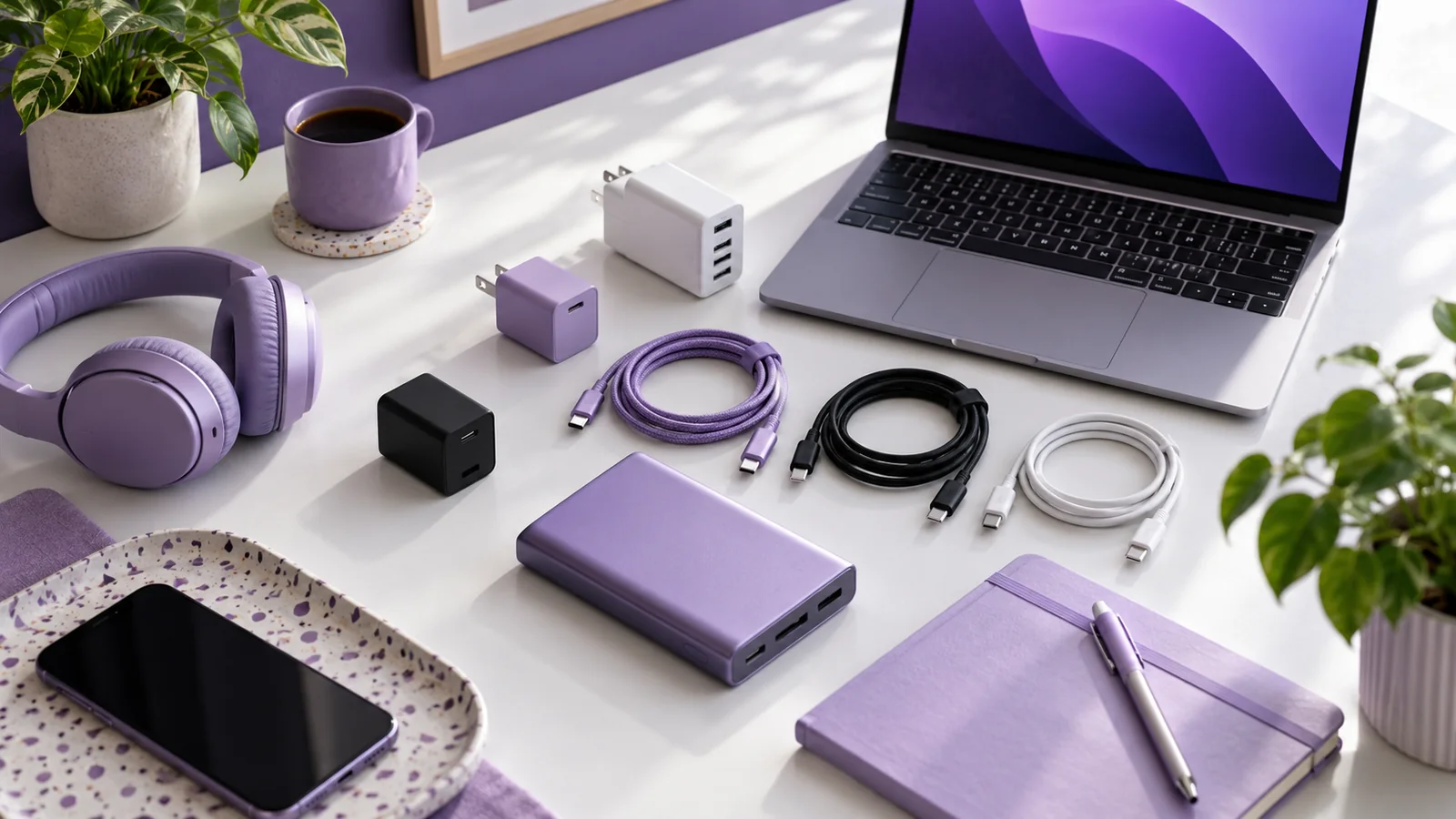
How to Choose the Right Power Bank: Capacity, Wattage & Charging Speed Explained
A power bank can be one of the most useful accessories to carry when you're away from a power outlet.
Whether you're travelling, working long hours, commuting or simply want backup power for your smartphone, a power bank gives you the flexibility to recharge your devices when you need them.
But choosing the right one isn't as simple as looking for the biggest mAh number.
You may see power banks labelled 5,000mAh, 10,000mAh, 20,000mAh or more, along with specifications such as 18W, 22.5W, 30W or 65W.
So what do these numbers actually mean?
And how do you choose a power bank that suits your needs?
Let's break it down.
What Is a Power Bank?
A power bank is essentially a portable battery system that stores electrical energy and allows you to use that stored energy to charge compatible electronic devices.
A typical power bank contains:
Battery cells
Input ports for recharging the power bank
Output ports for charging devices
Control circuitry for managing power delivery
Capacity is generally expressed in mAh (milliampere-hours), while charging power is expressed in watts (W).
These two specifications tell you different things.
Capacity = how much energy the power bank stores.
Wattage = how quickly it can deliver power to a compatible device.
Understanding this difference is the first step toward choosing the right power bank.
1. What Does mAh Mean?
The mAh rating indicates the electrical charge capacity of a battery.
In simple terms, a higher mAh rating generally means the power bank can store more energy and potentially provide more backup power.
For example:
5,000mAh — compact backup power
10,000mAh — practical everyday capacity
20,000mAh — larger backup capacity
30,000mAh+ — intended for higher-capacity requirements
However, don't assume that a 10,000mAh power bank will always deliver exactly the same amount of usable energy to your phone.
Energy is lost during voltage conversion and charging, so the rated battery capacity and usable output are not identical. Real-world performance depends on the power bank's design, conversion efficiency, device and charging conditions.
2. 5,000mAh vs 10,000mAh vs 20,000mAh
So which capacity should you choose?
It depends mainly on how you use your devices.
5,000mAh
A smaller power bank can be useful when portability is your priority.
It can suit:
Short outings
Emergency backup
Light daily use
Users who want something compact
10,000mAh
A 10,000mAh power bank is a practical middle ground for everyday use.
It can be suitable for:
Daily commuting
Workdays
Short trips
Smartphone backup
Earbuds and other small devices
DZIVE's catalogue includes the PB-100, a 10,000mAh power bank with 12W PD output, and the PB-110, a 10,000mAh model with 22.5W PD+ output.
20,000mAh
A 20,000mAh power bank provides more stored capacity and can be useful when you're away from a power outlet for longer periods or regularly carry multiple devices.
The trade-off is that higher-capacity power banks are generally larger and heavier than compact models.
30,000mAh and above
Higher capacities can be useful for extended travel, multiple devices and certain higher-power applications.
However, size, weight, charging requirements and travel restrictions should also be considered.
3. Capacity Isn't the Same as Charging Speed
This is one of the most important things to understand.
A power bank with a larger capacity isn't necessarily going to charge your phone faster.
For example:
Power Bank A 10,000mAh + 22.5W output
Power Bank B 20,000mAh + 10W output
Power Bank B stores more energy, but Power Bank A may provide faster charging to a compatible device.
That's because mAh and watts measure different things.
Think of it this way:
mAh → How much backup power is available
W → How quickly power can be delivered
Both matter.
4. Why Wattage Matters
Wattage represents the power available for charging a device.
Power banks can have different output levels, such as:
10W
12W
18W
20W
22.5W
30W
45W
65W and beyond
A higher output can enable faster charging when the connected device and charging protocol support it.
For example, a phone that supports 45W charging may benefit from a suitably compatible 45W power bank, while a device with a lower charging limit won't necessarily charge faster simply because the power bank has a higher maximum output.
So don't choose a power bank based only on its wattage.
5. What Is Power Delivery (PD)?
USB Power Delivery (USB PD) is a charging standard designed to provide flexible power delivery between compatible devices and chargers.
USB-IF explains that USB PD allows compatible devices to negotiate power requirements, enabling a device to request the power it needs rather than simply receiving the maximum available power.
This makes PD particularly useful for modern devices that support USB-C charging.
Depending on the power bank and device, USB-C PD can support:
Smartphones
Tablets
Portable electronics
Some laptops
The important point is that both the power bank and connected device need to support the appropriate charging capabilities.
6. Check the Input and Output Specifications
When looking at a power bank, you'll usually see specifications for both input and output.
Output
Output tells you how much power the power bank can provide to your device.
For example:
USB-C Output: 22.5W
This indicates the maximum supported output under the specified conditions.
Input
Input tells you how quickly the power bank itself can be recharged.
For example, a power bank may support:
USB-C Input: 20W
That means it can accept up to the specified input power when connected to a suitable charging source.
So if you want a power bank that doesn't take unnecessarily long to recharge, don't forget to check the input specification too.
7. Check the Ports
The ports on a power bank determine what devices and cables you can connect.
Common options include:
USB-A
USB-A remains widely used for charging accessories and older devices.
USB-C
USB-C is increasingly important for modern smartphones and other electronics, particularly where higher-power charging and USB PD are supported.
Multiple Ports
If you regularly carry several devices, a power bank with multiple output ports can be more convenient.
But there's an important detail:
The total output may be shared when multiple devices are connected.
For example, a power bank may advertise a high maximum output but provide a different output configuration when two or more devices are charging simultaneously.
Always check the manufacturer's output specifications.
8. Choose the Right Power Bank for Your Usage
Instead of asking:
"What's the best power bank?"
A better question is:
"What's the right power bank for my usage?"
For Everyday Commuting
Consider a compact 5,000mAh–10,000mAh model.
Prioritise:
Portability
Compact design
Convenient charging
Suitable smartphone output
For Long Workdays
A 10,000mAh–20,000mAh power bank can provide more backup when you're away from a charger for longer.
For Travel
Capacity becomes more important when you're travelling for extended periods.
You may want:
10,000mAh–20,000mAh or more
Multiple ports
USB-C
Fast charging
A balance between capacity and weight
For Multiple Devices
If you're carrying a smartphone, earbuds, smartwatch, tablet or other electronics, look at:
Capacity
Number of ports
Total output
Individual port output
Charging protocols
For Higher-Power Devices
If you're considering charging a laptop or other higher-power device, look beyond mAh.
You'll need to check USB-C PD support, output wattage and device compatibility. Higher-power devices can require substantially more power than a typical smartphone.
9. Don't Ignore the Cable
Your power bank is only one part of the charging system.
The device, power bank and cable all need to work together.
For example, a high-output USB-C power bank paired with an unsuitable cable may prevent you from achieving the expected charging performance.
When purchasing a power bank, check:
Connector type
Cable compatibility
Power rating
Charging standard
Device compatibility
If you're using USB-C PD, using an appropriate USB-C cable is particularly important for achieving the intended power delivery. USB-IF's specifications also define different capabilities for USB-C cables and connectors.
10. Look for Appropriate Safety Features
Power banks contain rechargeable batteries, so safety should be part of your buying decision.
When comparing products, look for clearly specified protection features such as:
Overcharge protection
Overcurrent protection
Short-circuit protection
Temperature protection
Appropriate regulatory or compliance information
The exact protection system varies by product.
Don't choose a power bank purely based on capacity or price.
A good power bank needs to balance capacity, performance and appropriate protection.
11. Consider Size and Weight
Higher capacity generally means more battery cells or greater stored energy, which can affect the physical size and weight of a power bank.
A compact 10,000mAh model may be much easier to carry in your pocket than a larger 20,000mAh model.
Think about where you'll use it.
Pocket carry
Choose portability.
Backpack or work bag
A larger capacity may be more practical.
Travel
Consider the balance between capacity, size, weight and applicable airline restrictions.
The right power bank isn't necessarily the largest one.
It's the one you will actually be comfortable carrying and using.
12. Check the Build and Design
A power bank is something you may carry frequently, so physical design matters too.
Look for:
Solid construction
Good-quality materials
Clear battery indicators
Convenient port placement
Comfortable size
Easy-to-read specifications
Additional features such as digital battery displays, LED indicators or built-in cables can also improve convenience depending on the product.
But treat these as secondary features after checking capacity, output, compatibility and safety.
13. Don't Choose Based on mAh Alone
A common mistake is to compare two power banks only by capacity.
Instead, compare the complete specification.
For example:
The right choice depends on what you need.
If you want something compact for everyday smartphone backup, Power Bank A could make more sense.
If you want greater stored capacity for longer periods away from a power source, Power Bank B may be more suitable.
Specifications need to be considered together.
14. What to Check Before Buying a Power Bank
Here's a simple checklist you can save:
1. Capacity
How much backup power do you need?
2. Output Wattage
How quickly does your device need to charge?
3. Input Wattage
How quickly can the power bank recharge itself?
4. Ports
Does it have the connectors you need?
5. Charging Protocol
Does it support PD, QC or the relevant standard for your device?
6. Cable Compatibility
Does your cable support the required charging capability?
7. Safety
Does the product specify appropriate protection features?
8. Size & Weight
Will you actually want to carry it?
9. Build Quality
Is the product designed for regular use?
10. Brand & Product Information
Are the specifications clearly provided and is the product backed by a reliable brand or supplier?
DZIVE Power Banks
Portable Power Built Around Everyday Requirements
DZIVE's power-bank range includes models designed around different charging requirements.
The catalogue currently features the PB-100, a 10,000mAh model with 12W PD output, and the PB-110, a 10,000mAh model offering 22.5W PD+, with both presented as portable charging solutions.
This gives businesses access to different power-bank specifications within the DZIVE portfolio.
For distributors, wholesalers and other business buyers, the wider DZIVE range also includes wall chargers, car chargers, charging cables, HDMI cables, neckbands, USB hubs and Wi-Fi dongles.
Final Thoughts
Choosing a power bank isn't about finding the product with the biggest capacity or the highest wattage.
It's about finding the right balance between:
Capacity + Charging Speed + Compatibility + Portability + Safety
For everyday smartphone use, a compact 10,000mAh model may be enough.
For longer trips or multiple devices, a larger-capacity model may make more sense.
And if fast charging is important, pay close attention to output wattage, charging protocols and cable compatibility.
The best power bank is ultimately the one that matches how you actually use your devices.
Explore the DZIVE range
Compare products across charging, power, audio and connectivity, or contact our team with your requirement.